New Task
Using the New Task feature, you can create a new task for a specific automation directly from the BotCity Orchestrator.

Snippet Generator
New task manipulation actions can be performed directly on the BotCity Orchestrator platform or via code, using the BotCity Maestro SDK or the BotCity Orchestrator API.
Explore the Snippet Generator button to get code examples that facilitate task manipulations using the BotCity Maestro SDK. Generate code snippets for the following actions: Interrupt a task, Check the interruption request, Finish a task, Retrieve a task and Access task parameters.
The generated snippets may be available in the Python, Java, JavaScript and TypeScript languages.

Search and filters
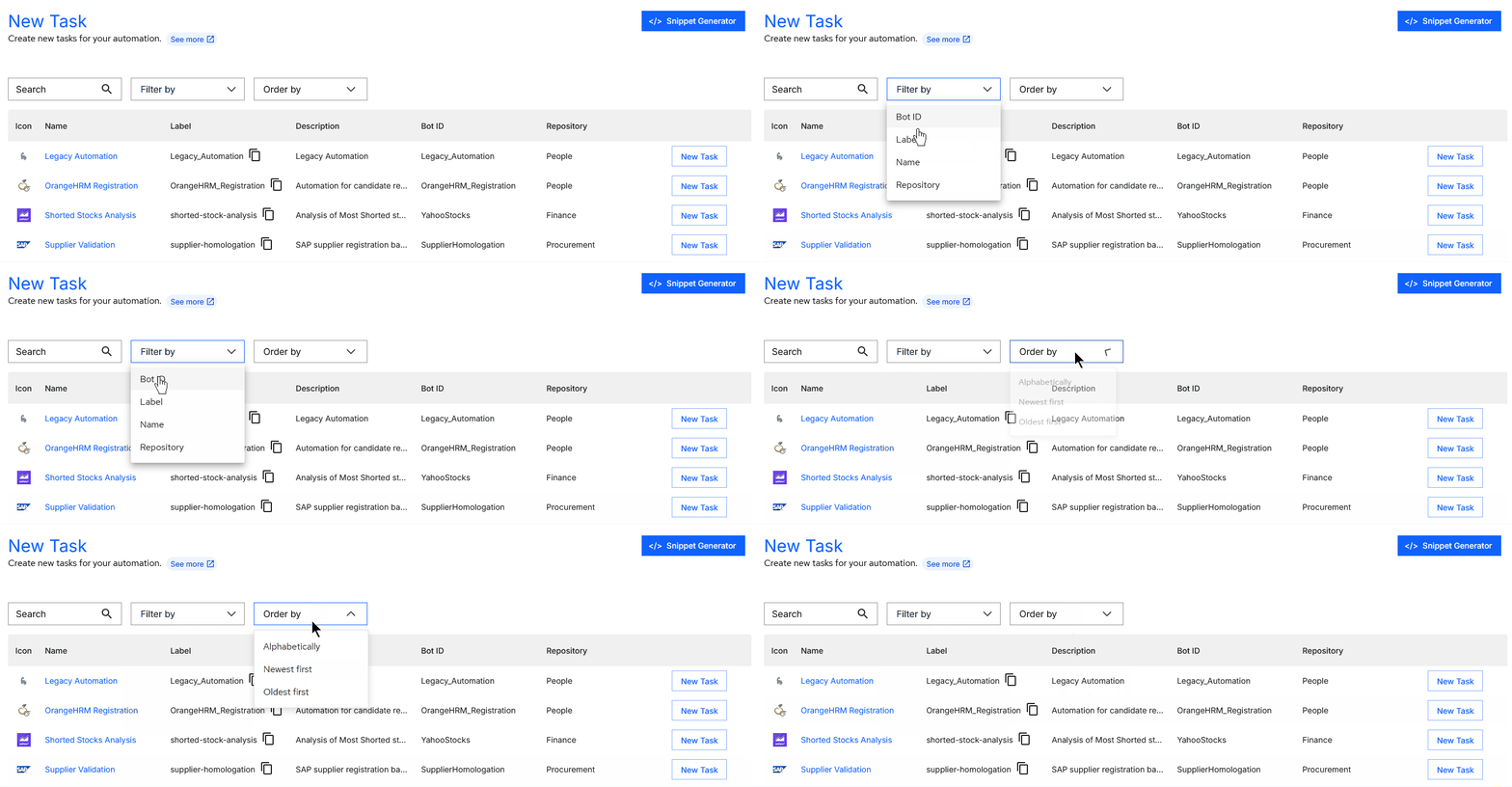
When accessing the New Task menu, you can see a table with all automations created in the BotCity Orchestrator.
You can combine multiple filters to search according to your needs.
Search by:
- Automation: Search by automation name.
Available filters:
- Bot ID: Select a specific Bot ID.
- Label: Select one or more labels to filter by.
- Name: Select one or more names to filter by.
- Repository: Select a specific repository.
Sort order:
- Alphabetically
- Most recent first
- Oldest first
Create New Task
To create a new task, click the New Task button for the chosen automation process and fill in the fields.

Test task
A checkbox that can be checked or unchecked to define the task type as test or production.
When this option is checked, a test task will be created, which allows you to:
- Restart the task as many times as needed, even after the task has been executed.
- Delete the task from the task history.
- Not include the data processed by this task in the BotCity Insights data reports.
Without checking the option, a production task will be created, which means:
- Runs only once.
- Remains in the task history with a completion state.
- Includes the data processed by this task in the BotCity Insights data reports.
Deleting a test task
If you want to delete a test task, you need to leave it In Queue state so that the delete option becomes available. To do this, simply restart the task and then delete it.
Minimum execution date
An optional field to define a minimum date for the task execution.
Without setting a minimum date, the task will be available for execution as soon as you click Create Task.
When setting a minimum date, the task will remain in the task queue with an In Queue state until the defined date and time are reached — meaning the task will only be available for execution after the defined minimum date.
Priority
The priority field is used to define the execution order of tasks — that is, when there is more than one task available for execution, priority will be the criterion used to determine which task should be executed first.
By default, tasks are executed in order of arrival, meaning the task that was created first will be executed first. However, by setting the priority, you can change this execution order.
Use the priority field to manage the queue, assigning values from 0 (lowest priority) to 10 (highest priority) for each task.
Parameters
The parameters of an automation allow you to create customized tasks by passing specific values for each execution. This makes your automations more flexible and adaptable to different scenarios, without the need to change the source code.
Parameterized automation
See how to create parameters for your automations by accessing the Automations documentation.
Confirm
Once the settings are defined, click Create to finish creating the task.
As soon as the task is created, it will be added to the task queue, and you can monitor its execution through the Tasks menu.

Warning! Your code is not reporting any processed items
If you see a warning regarding the reporting of processed items, it means your automation code is not yet reporting data to the platform.
Using this feature in your automation process allows you to have information about items processed successfully or with failure for each executed task.
See more details about this feature by accessing the BotCity Maestro SDK documentation.
Important
This feature is part of BotCity Insights, which is a dedicated module for reporting and displaying data related to your automation initiative.
See more details about this module by accessing the BotCity Insights documentation.